
Hair Toppers vs Hair Extensions: Choosing the Right Hair Solution for Your Needs
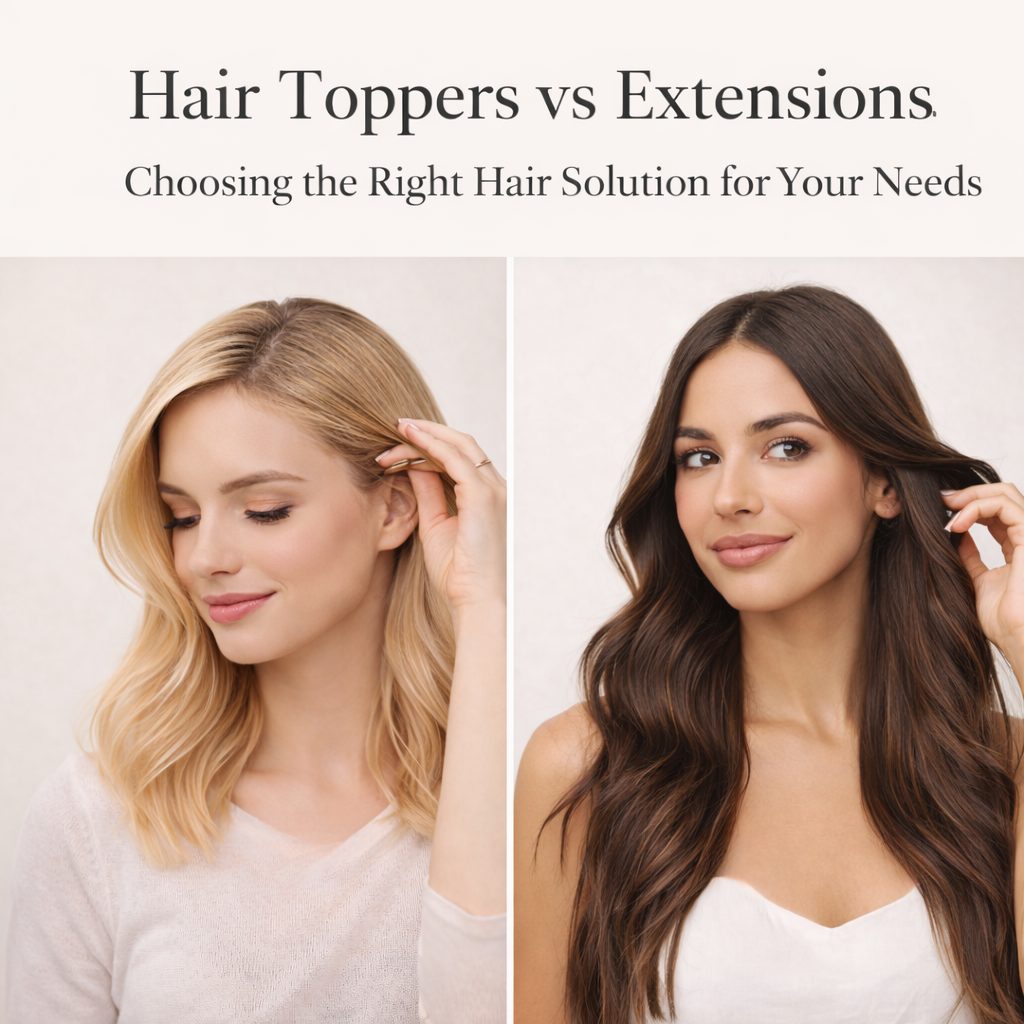
When it comes to enhancing hair, two solutions are often compared: hair toppers and hair extensions. While both are designed to improve the appearance of hair, they serve very different purposes. Understanding the difference between the two can help you choose the option that best fits your hair type, lifestyle, and goals. This guide breaks down how hair toppers and hair extensions work, who they are best suited for, and how to decide which solution is right for you. What Are Hair Extensions? Hair extensions are designed to add length, volume, or fullness to your existing hair. They are applied through various methods such as clip-ins, wefts, or professional installation techniques and blend into the mid-lengths and ends of natural hair. Hair extensions work best when there is already enough natural hair to support them. They enhance what you already have rather than covering specific areas of thinning or hair loss. Hair extensions are ideal if you want to: Add length to your natural hair Increase volume through the lengths Create fuller styles or dramatic looks Enhance styling versatility Because extensions rely on your natural hair for blending, they are most suitable for individuals with fine to medium hair density who are not experiencing noticeable thinning at the scalp. What Are Hair Toppers? Hair toppers are designed to provide coverage and volume at the crown or parting area of the head. Unlike extensions, toppers sit on top of the scalp and are intended to blend with your natural hair while disguising thinning areas. Hair toppers are often chosen by individuals experiencing hair thinning, hair loss, or reduced density, especially around the crown or hairline. They are lightweight, discreet, and crafted to look like natural hair growth at the scalp. Hair toppers are ideal if you want to: Add volume at the crown Cover thinning areas or sparse hair Create a fuller, more balanced silhouette Achieve a natural-looking scalp appearance Because toppers focus on coverage rather than length, they are commonly used as a hair replacement or enhancement solution rather than a styling accessory. Hair Toppers vs Hair Extensions: Key Differences Feature Hair Toppers Hair Extensions Primary purpose Coverage and crown volume Length and overall fullness Best for Thinning hair or hair loss Fine to medium hair Placement Top of the head / crown Mid-lengths to ends Coverage level Targeted scalp coverage No scalp coverage Natural blend Mimics natural hair growth Blends through lengths Daily wear Yes Yes Styling flexibility High High Maintenance Moderate Low to moderate This comparison helps clarify that hair toppers and hair extensions are not interchangeable, they solve different hair concerns. Which Option Is Best for Thin Hair or Hair Loss? If you are dealing with thin hair, visible scalp, or hair loss, a hair topper is usually the better choice. Toppers are specifically designed to sit where hair density is lowest, offering coverage that extensions cannot provide. Hair extensions, while excellent for adding fullness, can sometimes highlight thinning if there is not enough natural hair at the crown to blend them seamlessly. In these cases, extensions alone may not achieve the desired natural result. For individuals with general fine hair but no visible thinning, hair extensions can be a great solution to boost volume and length without the need for scalp coverage. How to Choose the Right Hair Solution for You Choosing between a hair topper and hair extensions comes down to a few key considerations: Your Hair Density If thinning is noticeable at the crown or parting, a topper will provide a more natural and balanced look. If your hair is evenly fine throughout, extensions may be enough. Your Styling Goals Those looking for longer styles, fuller ponytails, or dramatic volume often prefer extensions. If your goal is natural fullness and coverage, a topper is the better option. Comfort & Wear Both solutions are designed for daily wear, but the placement differs. Toppers sit on the scalp, while extensions integrate into existing hair. Personal comfort plays an important role in long-term satisfaction. Maintenance & Lifestyle Hair toppers typically require slightly more mindful placement, while extensions are easier to style once installed. Both benefit from proper care to maintain longevity. Final Thoughts: Finding the Right Hair Solution Hair toppers and hair extensions are both effective solutions, but only when chosen for the right reason. Extensions enhance length and fullness, while toppers provide coverage and balance where hair is thinning. Understanding your hair’s needs is the most important step in achieving natural, confident results. By choosing the solution that aligns with your hair type and lifestyle, you can enjoy a seamless look that feels comfortable, polished, and authentic. Explore our collection of hair toppers and hair extensions to find the solution that fits your needs.